


The beauty of long wedding films - Cinematic wedding films in Italy
in: Wedding videography in Italy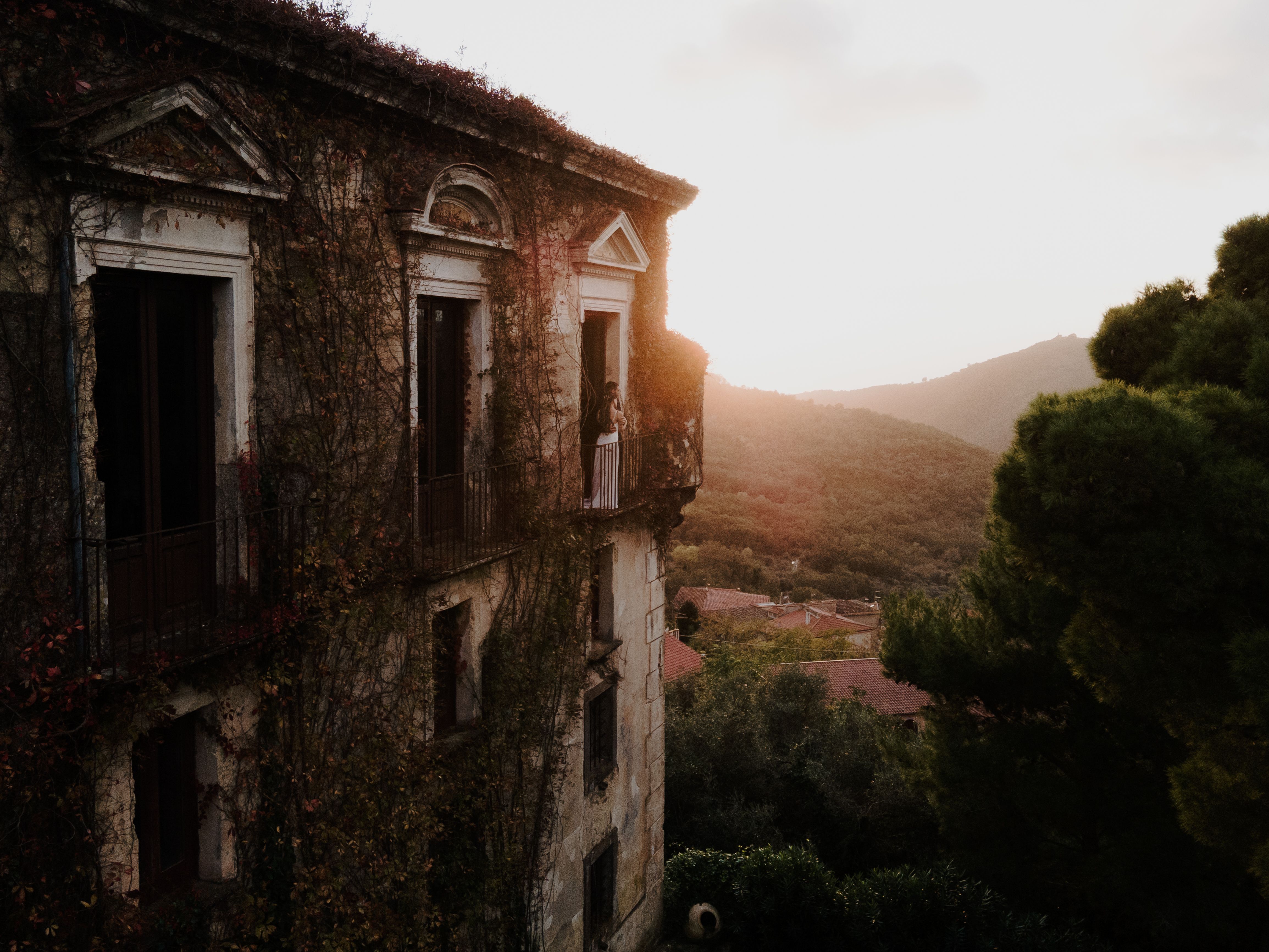
The beauty of long wedding films: why some memories need more time
There is a moment, at almost every wedding in Southern Italy, when time starts to behave differently. It stretches. It breathes. It refuses to rush.
The sun is still high, but already soft. The house is full of voices, overlapping like music without a conductor. Someone is calling from the kitchen. Someone else is laughing too loudly in the next room. A grandmother sits quietly, watching everything like she already knows it all by heart.
And in the middle of this controlled chaos, a wedding film is not something to “capture”. It is something to hold.
The rhythm behind real weddings in Southern Italy
Long before “cinematic wedding film” became a definition, there was something else. There were weddings in Southern Italy that didn’t fit into schedules. They didn’t ask for permission to unfold. From early morning preparations to late-night dancing when everything becomes looser, slower, more human — these days were never designed to be summarized.
They were designed to be lived. And that changes everything.
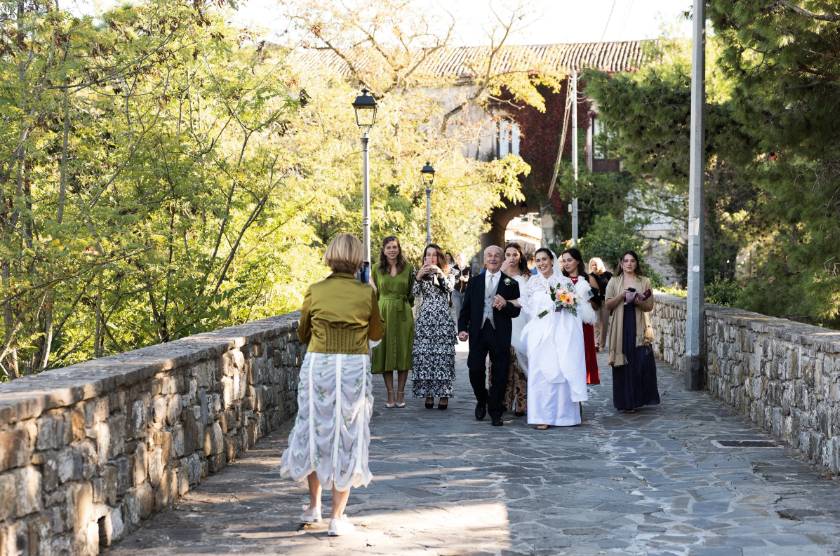
Why some stories resist being shortened
Some stories don’t want to be compressed. Because a wedding is not a sequence of highlights — it is a living ecosystem of emotions, relationships, silences, and movement.
A long wedding film exists for couples who understand one simple truth: memory is not efficient. Memory is complete.
Every glance no one planned. Every pause before a promise. Every embrace that lasts just a little longer than expected.
These are not “extra” moments. They are the structure of the day itself.
A way of seeing shaped by real Italian weddings
Working across Southern Italy teaches you something you cannot unsee. Weddings here are not performances. They are gatherings.
Large families. Open doors. Constant movement between rooms. Noise that feels like life itself refusing to be contained. In that environment, nothing feels disposable. Every detail is part of a larger emotional architecture.
And this is where the idea of cutting a wedding down to a few minutes starts to feel incomplete. Not wrong. Just incomplete.
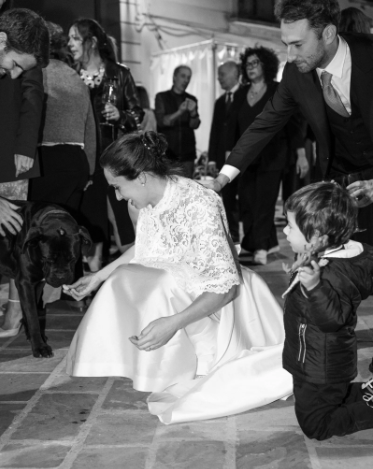
What a long wedding film really preserves
A long wedding film is not about duration. It is about respect.
Respect for the energy of the day. Respect for the people who shaped it. Respect for the fact that emotions do not arrive on schedule — they arrive in waves.
When a film is allowed to breathe, something subtle happens. You stop watching content. You start reliving a day.
Not just seeing it again — but entering it again.
Cinematic does not mean distant
There is a misconception that cinematic automatically means distant, polished to the point of detachment, as if beauty and emotion had to be carefully arranged before they can be shown. But real cinematic language has never really worked that way. It doesn’t stand outside the moment, observing it from afar — it enters it, quietly, almost invisibly, until you forget there was ever a camera at all.
It is in the way light falls on a face without asking permission. In the small hesitation before someone speaks. In the breath that comes just before a promise is made. These are not constructed moments, they are real fragments of life that simply need time to be seen for what they are.
A long wedding film allows this kind of closeness to exist without interruption. It doesn’t create distance to make things look better. Instead, it removes the urgency to explain everything immediately, and in doing so, it brings you closer to what is actually happening.
And that is where cinema, at its most honest, really lives — not in perfection, but in presence.
Why this matters today more than ever
We live in a world that has learned to move fast, sometimes too fast to notice what is actually happening in front of us. Everything is designed to be consumed quickly, to be reduced, to be summarized into fragments that fit into a scroll. But a wedding does not belong to that rhythm. A wedding has its own time, almost stubbornly human, where emotions take space instead of competing for attention.
Choosing a long wedding film, in this context, becomes something quietly intentional. It is a refusal to let a day disappear into highlights, and instead a decision to preserve its full emotional arc — the build-up, the pauses, the unpredictability, and the way everything slowly settles into memory. It is not about watching more, but about remembering more deeply.
And often, without saying it explicitly, that choice says something about the couple too. It suggests a certain way of seeing life itself, where meaning is not found only in peak moments, but in everything that surrounds them.
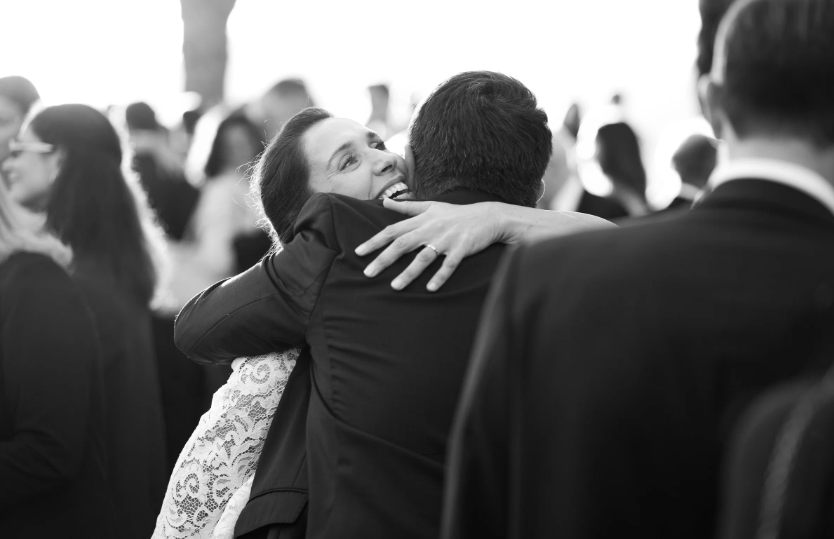
Final thought
Years from now, what remains of a wedding is never its structure or its timeline. Those things dissolve quickly, replaced by a softer, more emotional memory of what it felt like to be there.
What stays are fragments that refuse to fade: a voice calling from another room, a glance exchanged when no one was posing, a moment of silence before everything begins again. Light that falls in a certain way on a face. A feeling of being surrounded by people who matter.
A long wedding film does not try to organize these fragments into something neat. It lets them exist as they are, in their natural rhythm, so that when you return to them years later, they don’t feel like a reconstruction, but like something still alive.
Not a summary of a wedding day, but its memory — still breathing, still unfolding in time.
If your wedding is not meant to be remembered in fragments, but as a complete story that still feels alive years later, we would be honoured to hear it.
Tell us about your day — the people, the place, the feeling — and we will explore together how it could be preserved in its fullest form.
Write to us at [email protected] or fill out our contact form to tell us your story.
